
Fertilizer for Succulents & Cacti
Do you want to unlock the full potential of your succulents? Then high-quality fertilizer is an absolute must! Succulents are known for their ability to survive in extreme environments, but to maximize their beauty and growth, they need additional nutrients. A suitable succulent fertilizer provides your plants with the essential minerals they need for optimal development.
Discover our fabulous selection of first-class succulent fertilizers and learn more about when and how to best use them.
- Sold out
Special nutrient solution, cactus fertilizer, succulent fertilizer & bonsai 250ml
Regular price 9,90 €Unit price3,96 € /100ml -
 Sold out
Organic fertilizer 5+3+8 I 900ml
Regular price 6,90 €Unit price7,67 € /L Sold out
Air Plant Spray, Tillandsia Fertilizer
Regular price 5,80 €Unit price Sold out
Cactus Love Cactus and Succulent Fertilizer | 250ml
Regular price 9,50 €Unit price3,80 € /100ml- Sold out
-


Fueling growth
Properly Fertilizing Succulents: Everything You Need to Know
Succulents are known for their resilience, but they also require nutrients to grow healthily, develop vibrant colors, and produce flowers. Targeted, yet sparse fertilization helps prevent deficiencies and strengthens the plants in the long run.
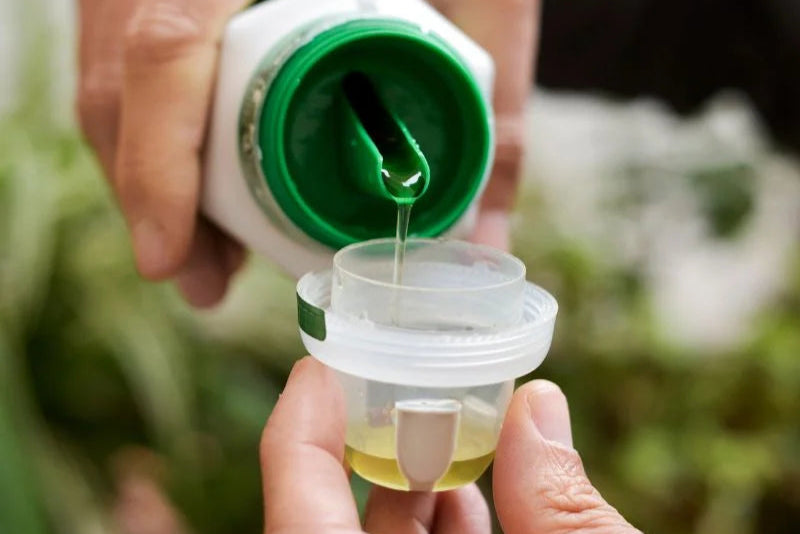
Basics of Fertilization: Why Do Succulents Need Fertilizer?
Succulents are adapted to nutrient-poor soils and store water and minerals in their thick leaves, stems, or roots. However, this does not mean they can do without fertilizer entirely.
Without occasional fertilization, it can happen that:
- Growth stagnates, and the plant hardly forms any new shoots.
- Leaves lose their vibrant color and become pale or yellowish.
- The plant becomes more susceptible to diseases and pests.
- Flowers fail to appear or are only weakly developed.
Especially for potted succulents, a regular supply of nutrients is important. While in nature, rain, decaying plant material, or mineral deposits introduce fresh nutrients into the substrate, these are leached out of pots over time. Therefore, targeted fertilization is crucial for the long-term health of the plants.
Nutrient Requirements of Succulents
Compared to other plants, succulents have relatively low nutrient requirements. Too much fertilizer can even harm them, as they are specialized for nutrient-poor locations. They are particularly sensitive to over-fertilization with nitrogen, as this leads to rapid but unstable growth. This can cause the plants to develop soft, water-rich leaves that are more susceptible to diseases and rot.
Basically, succulents need:
- Less nitrogen than many other plants.
- A balanced ratio of nutrients to stay healthy.
- Little to no fertilizer during their dormant phase (winter).
Well-balanced fertilization ensures robust, compact plants with intense colors and good resistance to drought and pests.

Which Macro and Micronutrients are Important?
Succulents require a combination of macro and micronutrients, each fulfilling different functions.
Macronutrients: The Essential Building Blocks
- Nitrogen (N) – Promotes growth but should be given in moderation. Too much nitrogen leads to soft, weak shoots.
- Phosphorus (P) – Supports root formation and flowering. Especially important for flowering succulents.
- Potassium (K) – Strengthens cell structure, improves resistance to drought and pests, and ensures vibrant colors.
Pasiora Tip: A fertilizer with a potassium-dominant NPK ratio, such as 3-5-7 or 4-6-8, is ideal for succulents.
Micronutrients: Small amounts, big impact
In addition to the main nutrients,
succulents require a range of trace elements that are present in smaller
amounts but are essential for their health:
- Magnesium (Mg) – Important for chlorophyll formation and thus for intense green coloration.
- Iron (Fe) – Necessary for photosynthesis. A deficiency is indicated by pale, yellowish leaves.
- Calcium (Ca) – Strengthens cell walls and promotes healthy growth.
- Sulphur (S) – Supports the formation of proteins and enzymes.
- Copper (Cu) & Zinc (Zn) – Boost the plant's immune system.
Pasiora Tip:
High-quality cactus fertilizer usually contains all important nutrients in
an optimal composition. Alternatively, liquid fertilizer
for green plants can be heavily diluted, or organic fertilizers can be used.
Which fertilizer is right for succulents?
Organic vs. mineral fertilizer
When choosing the right fertilizer, there are two basic options: organic and mineral fertilizers. Both have their advantages and disadvantages, which play a role depending on the plant species and care effort.
Organic fertilizer: Natural nutrients for sustainable growth
Organic fertilizers consist of natural materials that are slowly broken down and continuously release nutrients.
Advantages:
- Slow but sustainable nutrient supply.
- Promotes healthy soil life and improves soil structure.
- Lower risk of over-fertilization.
Disadvantages:
- Effect is delayed, as microorganisms first have to break down the fertilizer.
- Nutrient content can vary and is often lower than with mineral fertilizer.
Suitable organic fertilizers for succulents:
- Compost tea: Diluted liquid compost releases gentle nutrients.
- Guano: A natural fertilizer made from bat guano, rich in phosphorus.
- Horn meal or horn shavings: Provides nitrogen in small amounts over a long period.

Mineral fertilizer: Fast and targeted nutrient supply
Mineral fertilizers consist of chemically processed nutrients that are immediately available to the plant.
Advantages:
- Directly effective, as the nutrients are in soluble form.
- Precise dosing and targeted application possible.
- Often specifically available for succulents and cacti.
Disadvantages:
- Higher risk of over-fertilization if too much is used.
- No improvement of soil structure or promotion of microorganisms.
Recommendation: Special cactus fertilizer
with reduced nitrogen content is ideal for succulents. If you are looking for a
natural alternative, you can use organic liquid fertilizers such as
nettle slurry or diluted compost tea.
Liquid fertilizer, granules or sticks?
Fertilizers come in different forms, which differ in their
application and effect. Which variant is best
depends on the individual care effort and the needs of the plant.
Liquid fertilizer: The quick solution for targeted fertilization
Liquid fertilizer is added to
the watering can and immediately reaches the roots. It is particularly
practical for potted plants and a targeted nutrient supply.
Advantages:
- Immediately available, ideal for deficiency symptoms.
- Easy to dose and individually adaptable.
- Perfect for regular, mild fertilization.
Disadvantages:
- Must be applied regularly (every 2-4 weeks during the growing season).
- Risk of over-fertilization if not dosed correctly.
Basics of Fertilization: Why Do Succulents Need Fertilizer?
Granules: Long-term Nutrient Supply
Granules are mixed into the substrate and slowly release nutrients over several months.
Advantages:
- One-time application for long-lasting effect.
- No frequent re-fertilization necessary.
- Ideal for outdoor succulents or large planters.
Disadvantages:
- Harder to control, as nutrients can be released unevenly.
- Less flexible than liquid fertilizer.
Fertilizer Sticks: Convenient Alternative for Infrequent Waterers
Fertilizer sticks are simply inserted into the soil and slowly release their nutrients over several weeks.
Advantages:
- Very easy to use, perfect for beginners.
- Even nutrient release over a longer period.
Disadvantages:
- Less precise dosage possible.
- Often not optimal for succulents, as they have different nutrient requirements than classic houseplants.
Recommendation: For succulents, liquid fertilizer in low concentration is best,
as it can be dosed flexibly. If you prefer less effort, you can
use granules or sticks, but should pay attention to a suitable
composition.
Specialty Succulent Fertilizers vs. All-Purpose Fertilizers: Which is Better?
When choosing the right fertilizer for succulents, the question often arises: Should you use a special succulent fertilizer or is an all-purpose fertilizer sufficient? The answer depends on the composition and dosage.
Special Succulent Fertilizers: Perfectly tailored to their needs
Special succulent and
cactus fertilizers are precisely tailored to the needs of these plants.
They contain less nitrogen but a higher proportion of phosphorus and potassium, which keep growth more stable and compact.
Advantages:
- Low nitrogen content prevents excessive growth and keeps the plant compact.
- Balanced nutrient composition promotes healthy roots and leaves.
- Lower risk of over-fertilization, as the dosage is specifically adapted for succulents.
Recommendation: For those who want targeted care for their succulents, a special cactus fertilizer is the best choice.
All-purpose Fertilizers: To be used with caution
Normal flower fertilizers or
universal fertilizers often contain too much nitrogen. This
promotes rapid, soft growth, which makes succulents vulnerable.
How to use all-purpose fertilizers:
- Dilute heavily! (At least to a quarter of the recommended amount).
- Pay attention to the NPK ratio: A value like 5-10-10 (low nitrogen, more phosphorus & potassium) is better than a universal value like 10-10-10.
- Avoid long-term effects: Liquid fertilizers or easily soluble granules are better than slow-release fertilizers with high nitrogen release.
Conclusion:
Succulent fertilizer is the safer choice, but if only a
universal fertilizer is available, it can also be used heavily diluted.

When and how often should succulents be fertilized?
Succulents have relatively low nutrient requirements, but regular, moderate fertilization is important to promote healthy growth. There are a few basic rules to observe:
Basic rules for fertilizing succulents:
- Fertilize regularly during the growing season (spring & summer) – but in a weak concentration.
- Fertilize little or not at all in autumn and winter, as the plants go dormant.
- Never fertilize on dry soil – water lightly beforehand to prevent root burn.
- Do not fertilize for approx. 4–6 weeks after repotting with fresh soil, as the substrate is often pre-fertilized.
Recommended fertilization frequency:
- Liquid fertilizer: Every 2–4 weeks during the growing season.
- Granules or sticks: Once per season (spring or early summer).
Consider Seasons and Growth Phases
The fertilizer needs of succulents depend heavily on the season, as they grow in cycles:
Fertilizing in Spring and Summer
March to September is the main growing season for most succulents. During this phase, they require regular but mild fertilization.
Tips for fertilization:
- Liquid fertilizer: Every 2–4 weeks in low concentration.
- Granules or sticks: Once in spring or early summer.
- Adjust watering first: Lightly water before fertilizing for better nutrient distribution.
Special considerations for outdoor succulents:
Plants grown outdoors benefit from fertilization that prepares them for hot summers. Potassium-rich fertilizer strengthens cell structure and makes them more resistant to drought.
Fertilizing in Autumn and Winter – yes or no?
Many succulents slow their growth in autumn and enter a dormant phase in winter. During this time, they require little to no additional nutrients.
Why should you not fertilize in winter?
- Plants process nutrients slower, which can lead to over-fertilization.
- Excess nitrogen can lead to unhealthy, weak growth.
- In low light, succulents grow slower anyway – too much fertilizer can disrupt their dormant phase.
Exceptions:
- Winter-active succulents such as some Aloe or Haworthia species can still receive light fertilization.
- Succulents under artificial light (indoor grow lights) often continue to grow and can be lightly fertilized occasionally.
Recommended fertilization in autumn/winter:
- Liquid fertilizer: Max 1x every 6–8 weeks or omit entirely.
- Granules/sticks: No additional application required.
Conclusion: The Right Fertilization Plan for Healthy Succulents
Fertilization plan for healthy succulents depending on the season:
SeasonFertilization frequencyRecommended fertilizerSpring (March–May)Every 2–4 weeksLiquid fertilizer in low concentrationSummer (June–August)Every 2–4 weeksLiquid fertilizer or granulesAutumn (September–November)Max. 1x every 6–8 weeksOnly if needed, low dosageWinter (December–February)No fertilizationException: Winter-active species
Paiora-Tip:
Better to fertilize less than too much! Succulents are adapted to nutrient-poor soils – moderate fertilization keeps them healthy and strong.
Correct dosage: Less is more!
Succulents originate from barren, nutrient-poor soils and are therefore accustomed to a sparse supply of nutrients.
While other plants benefit from regular, abundant fertilization,
too high a nutrient concentration can be detrimental to succulents.
Why is less fertilizer better for succulents?
- Succulents grow slowly and need fewer nutrients than other plants.
- Too much fertilizer leads to excessive growth of leaves and shoots, which become soft and susceptible to diseases.
- An excess of nitrogen can reduce resistance to drought and pests.
Basic rule:
It is better to fertilize regularly in low concentration than rarely and highly concentrated. A gentle, continuous supply ensures compact, healthy plants.
Avoiding over-fertilization – typical signs
Too much fertilizer can significantly harm succulents. The most common symptoms of over-fertilization are:
Typical signs:
- Soft, unstable shoots: The plant grows unnaturally fast, becomes soft, and loses its compact shape.
- Leaves become glassy or translucent: A sign of cell damage due to excess nutrients.
- Brown or black roots: Due to chemical burns of the roots (salt accumulation in the soil).
- Whitish deposits on the soil: Indicate an accumulation of fertilizer salts that can damage the root system.
- Sudden leaf loss: Especially in sensitive species, too much fertilizer can lead to leaves shedding.
What to do in case of over-fertilization?
- Immediately flush the plant thoroughly with water (with good drainage).
- If the soil is heavily over-fertilized: Repot into fresh, nutrient-poor substrate.
- Suspend fertilization for at least one month until the plant has recovered.
Dilution rules for liquid fertilizer
Liquid fertilizer is the preferred choice for succulents because it is quickly absorbed by the roots and allows for even nutrient distribution. However, correct dilution is crucial to avoid damage.
Basic rules for dilution:
- Always halve the recommended dosage at least – succulents need less than other plants.
- For very strong fertilizers (e.g., universal flower fertilizer), reduce to a quarter of the indicated dose.
- Apply liquid fertilizer only to moist soil, never to completely dry soil, to avoid root damage.
Example of safe dilution:
- Manufacturer's recommendation: 5 ml fertilizer per 1 liter of water
- For succulents: Maximum 2.5 ml per 1 liter of water, ideally only 1–2 ml
Alternatively: Organic alternatives such as compost tea or diluted worm castings can be very gentle.
Fertilization errors and their consequences
Incorrect handling of fertilizer can significantly impair the health of succulents. Here are the most common mistakes and their effects:
Common fertilization errors:
ErrorConsequenceSolutionToo frequent fertilizationOver-fertilization, soft leaves, unstable shootsReduce fertilizer application, flush soilWrong fertilizer (e.g., too much nitrogen)Too fast, weak growth, susceptibility to pestsUse special succulent fertilizerFertilizing on dry soilRoot burnsWater lightly beforehandFertilizing during dormancy (winter)Plant grows unnaturally, weakens itselfFertilization break in winterNo fertilizer for yearsGrowth stunted, pale leavesLight fertilization in spring and summer
Note: Succulents need balanced, moderate fertilization – neither too much nor too little!
Conclusion: The right fertilization approach for healthy succulents
- Less is more: Weak, regular fertilization is better than too much at once.
- Recognize over-fertilization: Soft shoots, glassy leaves, and root damage are warning signs.
- Always dilute liquid fertilizer: At least to half or a quarter of the indicated amount.
- Avoid fertilization errors: Do not fertilize on dry soil and take a break in winter.
With these tips, your succulent will stay strong, healthy, and grow in its natural, compact form!

Home Remedies as Natural Fertilizers for Succulents
Many plant lovers rely on home remedies as natural alternatives
to commercial fertilizers. But are they really suitable for succulents?
There are indeed some proven home remedies that can serve as gentle
nutrient sources.
Coffee Grounds, Eggshells & Co. – Useful or Not?
☕ Coffee Grounds
- Contain nitrogen, potassium, and phosphorus – important nutrients for plants.
-
Suitability for Succulents: Limited!
Succulents need little nitrogen. Additionally, coffee grounds can slightly acidify the
soil, which not all succulents tolerate. If used, apply only sparingly and in a highly diluted form.
🥚 Eggshells
- Consist predominantly of calcium, which plants need for stable cell structures.
-
Suitability for Succulents: Yes, but only conditionally!
Eggshells decompose very slowly and release calcium over a longer period.
Mixed into the substrate as a finely ground powder, it can have a positive long-term effect.
🍌 Banana Peels
- Rich in potassium, which supports plant growth and resilience.
-
Suitability for Succulents: Limited!
Banana peels are difficult to decompose and can attract mold or fruit
flies. A better alternative is to dry the peels, pulverize them, and sparingly mix them into the substrate.
🐟 Aquarium Water
- Contains natural plant nutrients such as nitrogen compounds and trace elements.
- Suitability for Succulents: Yes, in moderation! Highly diluted, it can be used as a gentle liquid fertilizer. Caution: Never use with salty aquarium water!
Homemade Organic Fertilizer for Succulents
If you want to fertilize your succulents naturally, you can make a gentle, organic liquid fertilizer yourself. A simple method is a tea made from banana peels:
Recipe for a homemade potassium fertilizer:
- Cut one banana peel into small pieces and soak it in 500 ml of water.
- Let it steep overnight.
- Strain the liquid through a sieve and dilute it 1:5 with water.
- Use once a month as a gentle liquid fertilizer.
Repotting and fertilizing succulents: The perfect interplay
Repotting and fertilizing are closely linked because over time the
nutrient supply in the substrate becomes depleted. But when is it
really time for fresh soil, and should you fertilize immediately after repotting?
When is it time for fresh substrate?
A regular substrate change every 2–3 years ensures healthy roots and vigorous growth. Signs that your succulent needs new soil:
- The substrate is heavily compacted and allows water to pass through with difficulty.
- Roots are growing out of the pot's drainage holes.
- The plant grows slower or shows signs of nutrient deficiency.
- Whitish deposits (mineral residues) are visible on the soil.
When repotting, it is important to use a loose, well-draining substrate so that the roots can develop optimally.
Fertilizing after repotting – immediately or wait?
Do not fertilize immediately after repotting!
After repotting, the roots first need to get used to the new soil.
Immediate fertilization could damage the delicate roots.
Wait at least 3–4 weeks,
before you start fertilizing for the first time. During this time, the
plant can adapt to the new substrate and stabilize its roots.
Special Fertilization Tips for Different Succulent Species
Not all succulents have the same needs when it comes to
nutrient supply. Depending on the species, origin, and
growth habit, some plants require more or less fertilizer.
Cacti vs. Leaf Succulents: Differences in Nutrient Supply
Cacti
- Are adapted to extremely nutrient-poor soils.
- Require very little nitrogen, as it can lead to soft growth and rot.
- A special cactus fertilizer with reduced nitrogen content is optimal.
- Fertilization frequency: A maximum of every 4–6 weeks during the growing season, do not fertilize in winter.
Leaf Succulents (e.g., Echeveria, Crassula, Aloe, Sedum)
- Have larger, fleshy leaves in which they store water and nutrients.
- Require a bit more potassium for strong cell walls and healthy roots.
- A general succulent or cactus fertilizer with a balanced NPK ratio is well-suited.
- Fertilization frequency: Approximately every 3–4 weeks during the growing season, reduce or stop in winter.
Proper Fertilization for Rare and Delicate Species
Rare or delicate succulents, such as certain Lithops (Living Stones) or Ariocarpus species, have special requirements:
- Lithops: Fertilize only 1–2 times per year, otherwise they may grow too vigorously and lose their natural shape.
- Ariocarpus: Fertilize very rarely (max. 1–2 times per season) and never with nitrogen-containing fertilizer.
- Epiphytic Cacti (e.g., Christmas Cactus, Rhipsalis): Fertilize somewhat more frequently, as they require more moisture and nutrients than desert cacti.
Fertilizing Indoor and Outdoor Succulents
Succulents can be grown both as houseplants and outdoors. However, the conditions differ – and so does the fertilization.
Differences between Indoor and Outdoor Succulents
Indoor Succulents:
- Usually grow slower because they receive less light.
- Need less fertilizer than outdoor plants.
- Liquid fertilizer is ideal for good control of nutrient supply.
Outdoor Succulents:
- Grow faster in full sun and need more nutrients.
- Can be supplied with a slow-release fertilizer (e.g., organic granular fertilizer).
- Need to be fertilized less frequently but more specifically, as rain leaches out nutrients.
Special Requirements for Hardy Succulents
Hardy succulents (e.g., Sempervivum, Sedum, Opuntia) need a small nutrient boost in spring to sprout vigorously. Low-nitrogen fertilizers with a high potassium content help improve frost hardiness.
Important: No fertilization after late summer, as the plants need to prepare for winter dormancy.
Fertilizing Tillandsias – How to optimally care for your air plants
Tillandsias, also known as air plants, belong to the bromeliad family
and are characterized by the fact that they do not require soil.
Instead, they absorb water and nutrients through their trichomes
– which are fine, silvery-white hairs on their leaves.
Due to this unique adaptation, the fertilization of tillandsias also
differs from that of classic succulents.
Why do tillandsias need fertilizer?
In their natural environment, tillandsias grow on trees,
rocks, or cacti and receive their nutrients mainly from rainwater, dust particles, and organic matter
that accumulates on their leaves. Indoors or in the garden,
this natural nutrient source is lacking, which is why targeted fertilization
promotes growth and flowering.
What nutrients do tillandsias need?
-
Nitrogen (N) – Promotes leaf growth and strong, green plants.
-
Phosphorus (P) – Supports root formation (less relevant for mounted tillandsias) and flower development.
- Potassium (K) – Strengthens the plant and increases resistance to diseases and drought.
In addition, trace elements such as magnesium, iron, and zinc are important.
Which fertilizer is suitable for tillandsias?
Since tillandsias absorb their nutrients through their leaves, they require a special, very mild fertilizer that is administered via watering or spraying water. There are various options here:
- Special fertilizer for tillandsias or orchids – These contain exactly the right nutrient composition and are lightly dosed.
- Cactus fertilizer (heavily diluted!) – If no tillandsia fertilizer is available, cactus fertilizer can also be diluted 1:4 with water.
- Organic alternatives – Very heavily diluted compost tea or diluted seaweed extracts can serve as a natural alternative.
Not suitable:
- Flower fertilizer, as it is usually too high in nitrogen.
- Fertilizers with copper or zinc in high concentrations – these metals are toxic to tillandsias.
How and when to fertilize tillandsias correctly?
Tillandsias are best fertilized with spray water or during a water bath. The following should be observed:
Spring & Summer (growing phase):
Spray with lightly dosed liquid fertilizer 1–2 times a month or place in a soaking bath.
Autumn & Winter (dormancy):
Fertilize less – about every 6–8 weeks is completely sufficient. During winter, tillandsias are often less active and require fewer nutrients.
Especially important:
- Do not spray on dry plants! Tillandsias must be lightly moistened beforehand so that they can absorb nutrients better.
- Let them dry well! After spraying or soaking, the plants should dry within a few hours to prevent rot.
- Do not spray directly on flowers, as this can damage the bloom.
Fertilizing blooming tillandsias
When a tillandsia is blooming, it needs a little more energy. During this phase, you can spray it every 10–14 days with a bloom-promoting orchid fertilizer (heavily diluted).
Fertilizing tillandsias in terrariums or closed containers?
In closed containers, you should be very sparing with fertilizer, as nutrients can accumulate. Fertilizing every 2–3 months is completely sufficient here.
Frequent Questions & Myths about Tillandsia Fertilization
Do tillandsias even need fertilizer?
Yes, but only in small amounts.
In nature, they receive nutrients from rain and dust – this is missing
indoors. Light fertilization supports healthy growth.
Can I simply water my tillandsias with tap water?
Better not!
And if so, let it stand for at least a day. In many regions,
tap water is hard and can clog the trichomes. Soft rainwater or filtered water is ideal.
Can I fertilize my tillandsias with milk or tea?
A myth!
Milk and tea do contain nutrients, but they also promote mold and
rot. It is better to use specially formulated tillandsia fertilizers.
Can I fertilize my tillandsias with coffee grounds?
No! Coffee grounds are too acidic for tillandsias and can damage their leaves over time.

Frequently Asked Questions and Myths About Fertilizing Succulents
"Do succulents even need to be fertilized?"
Yes, but in moderation!
Succulents often originate from arid regions, but they still require a
minimal supply of nutrients. Regular, yet sparse,
fertilization promotes healthy growth, vibrant colors, and
resilient plants.
"Can I use cactus fertilizer for other succulents too?"
Yes, cactus fertilizer is suitable for many succulents as it usually has a low nitrogen content.
However, some leafy succulents need a little more potassium and
phosphorus to promote their growth. A special succulent fertilizer
is often the better choice.
"How do I know if my succulent is getting too few nutrients?"
Typical signs of nutrient deficiency:
- Slow growth, despite good light and water conditions.
- Pale or yellowed leaves.
- Soft or limp leaves that lose their firmness.
- Thin, unnaturally elongated shoots (but this can also be due to lack of light).
Sparse fertilization with diluted liquid fertilizer can help strengthen the plant again.
Fertilizer makes my succulents bigger and more beautiful – so should I fertilize more?
Wrong! Succulents are adapted to nutrient-poor conditions. Over-fertilization often leads to too rapid, unstable growth, making the plant soft and more susceptible to diseases and rot. Less is more!
Can I simply fertilize my succulents with regular flower fertilizer?
Not ideal! Flower fertilizer often contains too much nitrogen, which stimulates the growth of succulents too much and makes them soft and unstable.
If you don't have a special succulent fertilizer, dilute regular flower fertilizer by at least a quarter of the recommended concentration to avoid over-fertilization.
Do succulents need extra fertilizer in winter so they don't die?
No! Most succulents are dormant in winter and do not need any nutrients during this time.
Fertilization during the cold season can even be harmful, as the
plants cannot absorb and store the nutrients.
Can I use home remedies like coffee grounds or banana peels as fertilizer?
Only conditionally recommended!
Coffee grounds do contain nitrogen, but in the wrong dosage, they can
acidify the soil and inhibit root growth. Banana peels are rich in potassium,
but they decompose slowly and can cause mold.
Pasiora Tip: Diluted compost teas or special organic liquid fertilizers that can be precisely dosed are better.
Growing succulents in water – do they need fertilizer there too?
Yes! If you are growing succulents in water (e.g., hydroponics), they need very diluted liquid fertilizer, as water does not provide natural nutrients like soil. A small dose once a month is sufficient.
Do I need to fertilize my succulents immediately after repotting?
No! After
repotting, the roots are often slightly damaged and need time to
regenerate. Fresh soil also already contains some nutrients.
Pasiora Tip: Wait at least 3-4 weeks before you start fertilizing, so as not to overwhelm the plant.
Let customers speak for us
Habe zum 2 mal bestellt und bin sehr zufrieden alle meine Pflanzen sind gut angekommen
Die Tillandsien sind sehr schön, vielen Dank

Sehr schnelle und zuverlässige Lieferung. Alle Hoyas wurde sorgsam und mit viel Liebe eingepackt. Pflanzen sind m sehrbguten Zustand angekommen. Danke!

Sehr schöne Dudleya brittonii! Die Pflanze kam gut verpackt, gesund und in hervorragendem Zustand an. Ich bin sehr zufrieden und kann den Verkäufer nur empfehlen!

Kann noch nicht viel dazu sagen da ich dass zum ersten Mal verwende

Alles gut

Wunderschöne Tillandsie, würde ich wieder bestellen. Kam schnell und gut verpackt an, keinerlei Transportschäden

Wunderschön!

Sehr schnelle Lieferung sehr gut verpackt und die Pflanzen sind prima. Vielen Dank. Jederzeit wieder

Sehr gute Ware und schnelle Lieferung. Gerne wieder.

alle Pflanzen, die ich bei Ihnen gekauft habe sind sehr schön und heile angekommen. Meine Freundin und ich werden im Frühjahr weitere Pflanzen bei Ihnen bestellen. Diese Vielfalt an Sukkulenten hat uns fasziniert. Wir haben gesunde und starke Pflanzen bekommen vielen Dank

Richtige Größe, gute Qualität, schnelle Lieferung
Alles bestens 👍🏻

Sehr schöne Schildchen

Sehr schöne Pflanzen, bin sehr zu frieden

Eine sehr schöne, faszinierende Pflanze in sehr gutem Zustand. Ich bin sehr zufrieden :)
