


Stephania erecta - Caudex Ø 7-9cm
- Top quality from the succulent master craftsman.
- Hand-picked
- Special feature: Rarity
- Carefully and securely packaged in our special protective packaging.
- Labeled with the botanical name.
- With general care instructions from our master gardener.
- Pot size: Ø 6.0cm
- Without a decorative outer pot.
Stephania erecta - Caudex Ø 7-9cm is backordered and will ship as soon as it is back in stock.
Pickup currently unavailable at Wetzstein 1
1% of every order for nature conservation
1% of every order for nature conservation
🌍 With every order, you protect plant habitats. We donate 1% of every order to CSSA for the preservation of endangered succulent habitats.
Delivery & Shipping
Delivery & Shipping
A plant by mail sounds daring? It is. That's why we've developed protective packaging that allows your succulent single piece to travel as safely as hand luggage.
Not one has ever complained to us.
Reviews (0)
Reviews (0)
Stephania erecta – Unrooted Caudex and Its Cultivation
The Stephania erecta is one of the most exciting caudex plants for lovers of rare houseplants. Instead of being offered directly as a rooted specimen, it is often available as an unrooted tuber. This very starting form allows plant enthusiasts to experience the miracle of growth from the very beginning. With a little patience and the right approach, the seemingly inconspicuous caudex develops into a plant of extraordinary beauty.
Origin and Botanical Classification
The Stephania erecta originates from the dry regions of Southeast Asia, primarily Thailand and Laos. It belongs to the Menispermaceae family and is unmistakable due to its rounded, potato-like tuber. In nature, it survives long dry periods by storing nutrients and water in its caudex.
- Family: Menispermaceae
- Life Form: Caudex plant with climbing shoots
- Special Feature: Shedding of leaves in autumn, winter dormancy in a bare state
The Unrooted Caudex – What Does That Mean?
When purchased, you will receive an unrooted caudex, meaning a dormant tuber without shoots or roots. This may seem unusual at first glance, but it is a natural state. With the right steps, it can be successfully rooted and encouraged to sprout.
Cultivation Instructions:
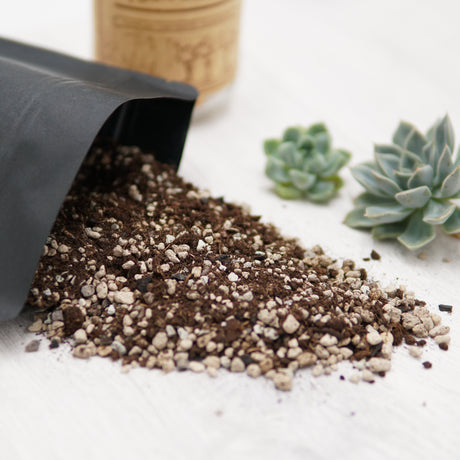
- Preparation: Carefully place the caudex in a suitable, shallow pot with well-draining substrate (a mixture of mineral components such as pumice, perlite, or sand). It should lie halfway on the substrate and not be fully buried.
- Location: Place in a warm and bright spot; ideal temperatures are between 22–28 °C.
- Watering: Initially, mist very sparingly until the first roots appear. Later, watering can be done carefully.
- Patience: Sprouting often takes several weeks to months.
Appearance After Successful Sprouting
As soon as the Stephania erecta becomes active, delicate tendrils emerge from the tuber, bearing heart-shaped, translucent green leaves. The delicate foliage contrasts sharply with the massive caudex, making the plant a true design object.
- Caudex: Round to oval, light brown, cracking with age.
- Leaves: Thin, round to heart-shaped, delicate green.
- Shoots: Climbing, requiring support.
- Flowers: Very rare in cultivation, small and inconspicuous.
Annual Rhythm and Dormancy
The Stephania erecta follows a clear annual cycle. After an active growth phase in spring and summer, it sheds its leaves in autumn. The caudex then remains bare – a natural process often mistaken for death. In reality, the plant gathers strength for the next sprouting during this time.
- Autumn: Leaves yellow, dry out, and fall off.
- Winter: Water little to not at all, do not fertilize.
- Spring: Choose a brighter location, water thoroughly once, await sprouting.
Care Instructions at a Glance
- Location: Bright, warm, no direct midday sun.
- Temperature: 20–28 °C during the growing season, slightly cooler in winter.
- Substrate: Very well-draining, mineral, pot with drainage hole.
- Water: Moderately during rooting and growing season, almost none in winter.
- Fertilization: From sprouting, weakly diluted liquid fertilizer approximately every 4 weeks.
Frequently Asked Questions
-
How long does it take for an unrooted caudex to sprout?
Depending on conditions, 4–12 weeks, sometimes longer.
-
Should I bury the caudex completely?
No, it should only sit halfway in the substrate.
-
How do I know if roots are growing?
The caudex remains firm and does not shrink further – that's a good sign.
-
My plant remains bare, is it dead?
Probably not. Patience is needed; some specimens sprout very late.
-
What to do if the tuber shrinks?
Water minimally or mist lightly.
-
When do the leaves appear?
After rooting in spring or summer.
-
Does the plant need winter dormancy in its first year?
Yes, even a freshly rooted caudex follows this cycle.
-
Can I place it outdoors?
In summer, yes, but protected from rain and scorching midday sun.
-
Which containers are best?
Shallow trays or pots with drainage are ideal.
- How long can a Stephania erecta live?
Decades, if cared for properly.
Summary
An unrooted Stephania erecta caudex is the perfect choice for plant lovers who enjoy experiencing the entire developmental process – from the first root emergence to full leaf sprouting. With patience, the right location, and restrained care, the inconspicuous tuber transforms into an elegant, exotic houseplant that fascinates with its seasonal rhythm and striking appearance.
Stephania erecta – Quick Guide for Unrooted Caudex
- Planting the Caudex
– Place in a shallow pot with mineral substrate (bury only halfway). - Choosing a Location
– Bright & warm (22–28 °C), but without direct midday sun. - Watering
– Initially, only mist lightly. Water carefully only after root formation. - Being Patient
– Sprouting often occurs only after 4–12 weeks. - Care After Sprouting
– Water regularly but moderately. Fertilize weakly about once a month. - Observing Winter Dormancy
– In autumn, the leaves fall off → then water barely, do not fertilize.


Gewährleistung & Deine Rechte
Unsere Pflanzen sind lebende Naturprodukte und kein Industrieartikel. Jede Pflanze ist ein Unikat: Form, Größe, Färbung und Beblätterung können vom Produktfoto abweichen. Das ist kein Mangel, sondern Teil ihres natürlichen Charakters.
Wir prüfen jede Pflanze vor dem Versand und verpacken sie so, dass sie gesund und im perfekten Zustand bei Dir ankommt. Für den Zustand bei Lieferung stehen wir selbstverständlich ein. Sollte Deine Pflanze beschädigt oder erkennbar nicht in Ordnung ankommen, melde Dich einfach innerhalb weniger Tage bei uns und dokumentiere alles mit ein bis zwei Fotos. Wir finden eine Lösung.
Wie sich eine Sukkulente danach entwickelt, hängt von Standort, Gießverhalten und Jahreszeit ab. Kleinere Veränderungen wie das Einziehen unterer Blätter, angepasstes Wachstum oder eine veränderte Färbung sind normale Anzeichen eines lebenden Organismus, der sich an sein neues Zuhause gewöhnt. Damit Deine Pflanze gut anwächst, findest du bei uns ausführliche Pflege- und Standorttipps.
Deine gesetzlichen Rechte bleiben davon unberührt - die Einzelheiten dazu findest Du im Gewährleistungshinweis oben.
