

Crassula falcata minor - 5.5cm
- Top quality from the succulent master craftsman.
- Hand-picked
- Special feature: Rarity
- Carefully and securely packaged in our special protective packaging.
- Labeled with botanical name.
- With general care instructions from our master gardener.
- Pot size: Ø 6.0cm
- Without a decorative pot
Crassula falcata minor - 5.5cm is backordered and will ship as soon as it is back in stock.
Pickup currently unavailable at Wetzstein 1
1% of every order for nature conservation
1% of every order for nature conservation
🌍 With every order, you help protect plant habitats. We donate 1% of every order to CSSA for the preservation of endangered succulent habitats.
Care instructions for your
Care instructions for your
Display general product information or specific product information using metafields.
Delivery & Shipping
Delivery & Shipping
Your succulent travels safely and protected: Individually packed in our custom plant box, it arrives stress-free and ready to conquer its new home.
Reviews (0)
Reviews (0)
Your new succulent roommate 🌿
I am
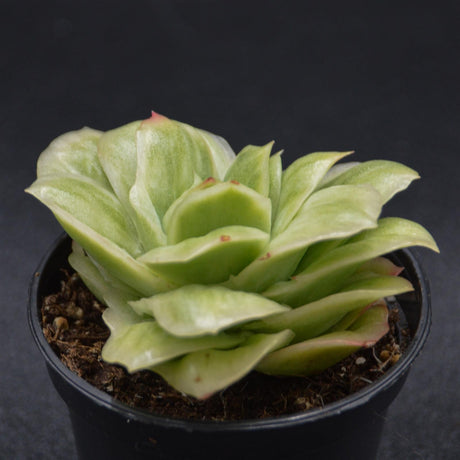
Crassula falcata is green with a rosette-shaped growth habit. The flowers are pink and arranged in umbels. They bloom between May and August. You will receive a plant in a 5.5cm pot, with a total height of pot and plant of approximately 7cm. The plant can grow to a height of 15cm to 35cm.
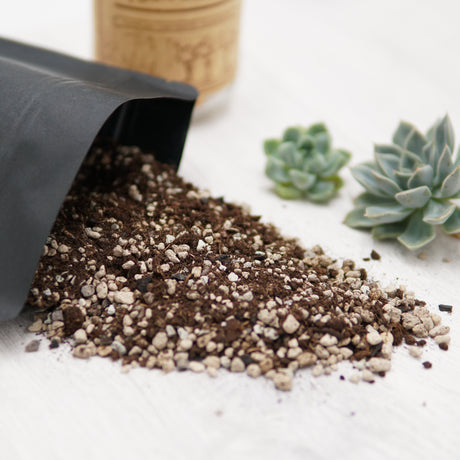
Caring for Crassula falcata is relatively easy. A mixture of cactus and succulent soil is suitable as a substrate. Crassula falcata does not tolerate waterlogging, so you should ensure good drainage and allow the substrate to dry out before watering again. Generally, this succulent tolerates too little water rather than too much. Fertilizing can be done once a month, or every four weeks.
This succulent needs a sunny, bright to semi-shaded location to meet its light requirements. The optimal temperature is between 20°C and 30°C. Crassula falcata can spend the summer outdoors after being gradually acclimated to direct sunlight. In winter, the temperature should be around 15°C. Furthermore, fertilizing is stopped and watering is reduced. However, this succulent is not suitable for the garden.
This succulent can be propagated by seeds, but also by leaf and stem cuttings. Crassula falcata is generally non-toxic, but we cannot guarantee its compatibility with animals.
Please note: Sizes and shapes may vary for plants, as each item is unique. This is especially true in winter or when availability is low. The color also varies depending on the season.



Gewährleistung & Deine Rechte
Unsere Pflanzen sind lebende Naturprodukte und kein Industrieartikel. Jede Pflanze ist ein Unikat: Form, Größe, Färbung und Beblätterung können vom Produktfoto abweichen. Das ist kein Mangel, sondern Teil ihres natürlichen Charakters.
Wir prüfen jede Pflanze vor dem Versand und verpacken sie so, dass sie gesund und im perfekten Zustand bei Dir ankommt. Für den Zustand bei Lieferung stehen wir selbstverständlich ein. Sollte Deine Pflanze beschädigt oder erkennbar nicht in Ordnung ankommen, melde Dich einfach innerhalb weniger Tage bei uns und dokumentiere alles mit ein bis zwei Fotos. Wir finden eine Lösung.
Wie sich eine Sukkulente danach entwickelt, hängt von Standort, Gießverhalten und Jahreszeit ab. Kleinere Veränderungen wie das Einziehen unterer Blätter, angepasstes Wachstum oder eine veränderte Färbung sind normale Anzeichen eines lebenden Organismus, der sich an sein neues Zuhause gewöhnt. Damit Deine Pflanze gut anwächst, findest du bei uns ausführliche Pflege- und Standorttipps.
Deine gesetzlichen Rechte bleiben davon unberührt - die Einzelheiten dazu findest Du im Gewährleistungshinweis oben.
