

Monanthes polyphylla - 5.5cm
- Top quality from the succulent master craftsman.
- Hand-picked
- Special feature: Rarity
- Carefully and securely packaged in our special protective packaging.
- Labeled with botanical name.
- With general care instructions from our master gardener.
- Pot size: Ø 6.0cm
- Without a decorative pot
Monanthes polyphylla - 5.5cm is backordered and will ship as soon as it is back in stock.
Pickup currently unavailable at Wetzstein 1
1% of every order for nature conservation
1% of every order for nature conservation
🌍 With every order, you help protect plant habitats. We donate 1% of every order to CSSA for the preservation of endangered succulent habitats.
Care instructions for your
Care instructions for your
Display general product information or specific product information using metafields.
Delivery & Shipping
Delivery & Shipping
Your succulent travels safely and protected: Individually packed in our custom plant box, it arrives stress-free and ready to conquer its new home.
Reviews (0)
Reviews (0)
Your new succulent roommate 🌿
I am
Monanthes polyphylla – a rarity for experienced succulent enthusiasts
Monanthes polyphylla is a rare and extremely fascinating succulent that captivates with its delicate appearance and unusual growth habit. With its numerous, densely arranged leaves, it forms compact rosette cushions that, in their structure, almost resemble miniature works of art. However, due to its special requirements, it is less suitable for beginners – rather, it is a true collector's plant for passionate succulent lovers who enjoy rarities.
Origin and botanical characteristics
Like all Monanthes species, Monanthes polyphylla belongs to the Crassulaceae family and originates from the Canary Islands. There, it preferably grows in rock crevices, on old walls, or in barren, mineral soils. Its name "polyphylla" means "many-leaved" – a fitting description for its dense, branched rosettes.
In its native habitat, it is accustomed to harsh conditions: intense sunlight, strong temperature fluctuations between day and night, and long dry periods. This adaptation makes it robust against climate extremes, but in cultivation, it requires patience, sensitivity, and experience.
Appearance
- Growth habit: Small, dense rosettes that form flat cushions or mats.
- Leaves: Tiny, numerous, and very densely arranged; the color ranges from fresh green to brownish-green, sometimes with a reddish tinge in intense sun.
- Flowers: In spring to summer, star-shaped, delicate yellowish-green flowers appear above the rosettes. Although they may seem inconspicuous, in combination with the fine leaf structure, they are a fascinating sight.
- Size: Individual rosettes remain tiny (approx. 0.5–1 cm), but together they create an attractive, carpet-like appearance.
Care instructions
Location
Monanthes polyphylla needs a bright, sunny to partially shaded spot. East or west-facing windows are ideal. Direct midday sun in summer should be avoided or diffused with light shading.
Watering
The plant is sensitive to waterlogging. The substrate should dry out completely before watering again. Water moderately during the growing season in spring and summer, but very sparingly in winter.
Substrate
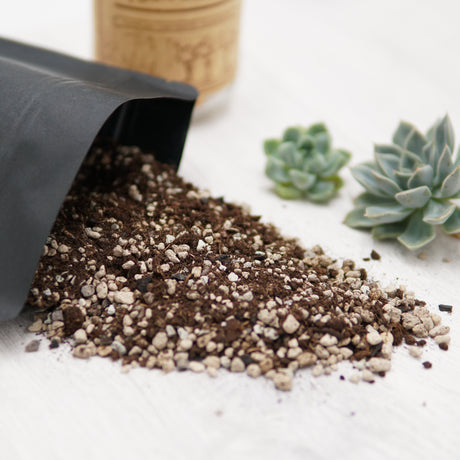
A very well-draining, mineral substrate is crucial. A mixture of cactus soil, pumice, lava grit, and some sand is best. Waterlogging must be avoided at all costs, as the fine roots can easily rot.
Temperature
- Summer: optimal between 18 and 25 °C.
- Winter: cool and bright at 8–12 °C.
This winter dormancy is important for successful flowering.
Fertilization
During the growth phase, a weak, potassium-rich succulent fertilizer can be used every 4–6 weeks. No fertilization is given during winter dormancy.
Propagation
Monanthes polyphylla can be propagated by:
- Division: Older cushions can be carefully separated into smaller pieces and repotted.
- Seeds: Sowing is possible, but time-consuming and demanding.
As the plant is sensitive to changes, patience is necessary during propagation.
Applications
- Collector's plant: A true specialty for lovers of rare succulents.
- Miniature gardens and terrariums: Ideal for arrangements that emphasize small, delicate plants.
- Decorative detail: In bowls or as a contrast to large-leaved succulents, it looks particularly elegant.
Tips and tricks
- Do not keep too wet: Especially important as its fine roots are sensitive.
- Plan for patience: Monanthes polyphylla grows slowly and primarily rewards experienced carers.
- Air circulation: A well-ventilated location prevents fungal diseases and rot.
Frequently asked questions
1. Is Monanthes polyphylla suitable for beginners?
No, this species is more demanding and is recommended for experienced collectors.
2. How often should I water it?
Only when the substrate is completely dry – about every 1–2 weeks in summer, even less frequently in winter.
3. Can it be kept outdoors?
Yes, in summer, in a sheltered, bright location. In winter, it must be brought indoors.
4. Does the plant need winter dormancy?
Yes, a cool and bright winter phase promotes flowering.
5. How big does Monanthes polyphylla get?
Individual rosettes are very small, but together they can form cushions several centimeters across.
6. Why is it more difficult to care for than other Monanthes?
Mainly because of its fine roots and its sensitivity to waterlogging.
7. Can it be kept in a terrarium?
Yes, but only in an open terrarium with good ventilation – high humidity harms it.
8. How long does Monanthes polyphylla live?
With proper care, many years – rosettes die after flowering but are replaced by daughter rosettes beforehand.
9. Do I need to repot it regularly?
Every 2–3 years into fresh, very well-draining substrate. Handle the fine roots carefully during repotting.
10. Why do the leaves sometimes turn reddish?
This is a natural reaction to intense sun or slight dryness – no cause for concern.
Conclusion
Monanthes polyphylla is a fascinating but demanding succulent that captivates with its delicate cushions and graceful flowers. It is less intended for beginners but offers experienced collectors a rewarding challenge. With patience, the right substrate, and a good balance of water, light, and rest periods, it will become a long-lasting treasure in any succulent collection.
Blog: You can find an article about Monanthes polyphylla here .



Gewährleistung & Deine Rechte
Unsere Pflanzen sind lebende Naturprodukte und kein Industrieartikel. Jede Pflanze ist ein Unikat: Form, Größe, Färbung und Beblätterung können vom Produktfoto abweichen. Das ist kein Mangel, sondern Teil ihres natürlichen Charakters.
Wir prüfen jede Pflanze vor dem Versand und verpacken sie so, dass sie gesund und im perfekten Zustand bei Dir ankommt. Für den Zustand bei Lieferung stehen wir selbstverständlich ein. Sollte Deine Pflanze beschädigt oder erkennbar nicht in Ordnung ankommen, melde Dich einfach innerhalb weniger Tage bei uns und dokumentiere alles mit ein bis zwei Fotos. Wir finden eine Lösung.
Wie sich eine Sukkulente danach entwickelt, hängt von Standort, Gießverhalten und Jahreszeit ab. Kleinere Veränderungen wie das Einziehen unterer Blätter, angepasstes Wachstum oder eine veränderte Färbung sind normale Anzeichen eines lebenden Organismus, der sich an sein neues Zuhause gewöhnt. Damit Deine Pflanze gut anwächst, findest du bei uns ausführliche Pflege- und Standorttipps.
Deine gesetzlichen Rechte bleiben davon unberührt - die Einzelheiten dazu findest Du im Gewährleistungshinweis oben.
