

Othonna capensis Ruby Necklace - 15cm
- Top quality from the succulent master craftsman.
- Hand-picked
- Special feature: Rarity
- Carefully and securely packaged in our special protective packaging.
- Labeled with botanical name.
- With general care instructions from our master gardener.
- Pot size: Ø 6.0cm
- Without a decorative pot
Othonna capensis Ruby Necklace - 15cm is backordered and will ship as soon as it is back in stock.
Pickup currently unavailable at Wetzstein 1
Care instructions for your
Care instructions for your
Succulents store water in their leaves and therefore tolerate drought well. Place them in a bright, sunny spot and only water them when the soil is completely dry. Avoid waterlogging at all costs!
It's better to water a little too little than too much.
Care instructions for your
Care instructions for your
Succulents store water in their leaves and therefore tolerate drought well. Place them in a bright, sunny spot and only water when the soil is completely dry. Avoid waterlogging at all costs!
It's better to water a little too little than too much.
Delivery & Shipping
Delivery & Shipping
We pack each plant with love and care in our specially developed protective packaging. This ensures that your plants arrive healthy and undamaged.
Reviews (0)
Reviews (0)
🌿 Profile & Origin
🌿 Profile & Origin
Here you will find the most important information about your :
Genus:
Origin:
Your new succulent roommate 🌿
I am
Othonna capensis Ruby Necklace – A Play of Colors and Floral Splendor in One Plant
The Othonna capensis Ruby Necklace is an extraordinary trailing succulent that captivates with its year-round play of colors and contrasting blossoms. Its long, trailing tendrils in intense red and purple hues resemble a living string of gemstones. In spring and summer, small, radiant yellow flowers emerge, shining like tiny suns on the colorful shoots. This plant thus combines two eye-catching features: richly colored foliage and cheerful blossoms.
Origin and Botanical Background
The Othonna capensis originates from southern Africa, where it grows on rocky slopes and sunny locations. Botanically, it belongs to the Asteraceae family. Its ability to store water in its succulent leaves allows it to easily withstand dry periods. The special variety Ruby Necklace has become a true trend plant due to its intense shoot and leaf coloration.
Appearance
- Shoots: Slender and trailing, turning deep ruby red in bright sun, greener with less light.
- Leaves: Narrow, succulent, glossy, and variable in color – from fresh green to pink to dark purple.
- Flowers: From spring to summer, small, star-shaped flowers appear in bright yellow, standing like tiny highlights above the colorful foliage.
- Growth habit: Ideal for hanging baskets – the shoots can grow up to 50–60 cm long.
The interplay of red foliage and yellow flowers makes the plant an extraordinary ornamental piece.
Care Instructions
Location
A bright to full sun location ensures the most intense coloration. South or west-facing windows are ideal. In summer, the plant can be moved outdoors, protected from heavy rain showers.
Watering
The substrate should dry out thoroughly between waterings. Avoid waterlogging at all costs. During the dormant period in winter, very little water is sufficient – sometimes watering every few weeks is enough.
Substrate
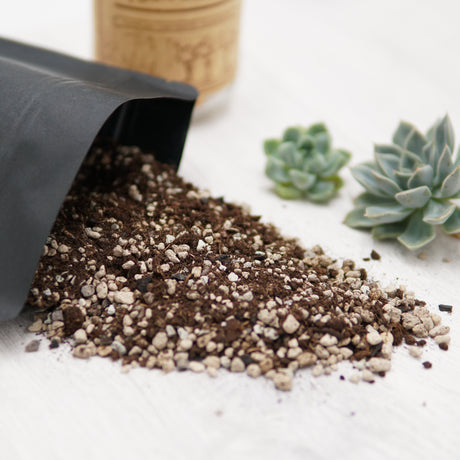
Well-draining succulent soil is crucial. A mixture with sand, perlite, or lava gravel prevents waterlogging.
Temperature
The plant thrives at 18–25 °C in summer. In winter, it prefers a cool, frost-free environment at 10–12 °C.
Fertilization
During the growing season (spring to autumn), fertilize every three to four weeks with a succulent fertilizer. Do not fertilize in winter.
Propagation
Propagation is very easy via cuttings. Simply cut off a shoot, let it dry for a few days, and then place it in dry, mineral substrate. New plants can be created with little effort.
Applications
- Hanging baskets: Perfect for its long, purple tendrils.
- Floral accent: The yellow flowers in summer create bright contrasts.
- Combination: Together with green succulents or cacti, an exciting play of colors emerges.
- Indoors & Outdoors: Decorative in living spaces, a summer highlight on balconies and terraces.
Tips and Tricks
- Plenty of light ensures the most intense ruby color.
- Regular pruning of the shoots promotes dense, bushy growth.
- Repotting every 2–3 years keeps the plant vital.
Frequently Asked Questions
1. Why are the shoots of my Ruby Necklace greener than red?
The coloration depends heavily on light intensity – more sun leads to deeper ruby colors.
2. Does the plant bloom every year?
Yes, with good care, the yellow flowers reliably appear in spring and summer.
3. How long can the tendrils grow?
Up to 60 cm, depending on location and care.
4. Is the plant poisonous?
There are no indications of strong toxicity, but it should not be consumed.
5. Can I plant the plant outdoors in the garden?
Only in frost-free regions. In Central Europe, it is better to cultivate it as a potted or houseplant.
6. How fast does Othonna capensis Ruby Necklace grow?
It grows relatively quickly and can develop many new shoots within one season.
7. Do I need to prune the plant?
Pruning is not strictly necessary but promotes bushier growth.
8. How often should I water in summer?
Approximately every 7–10 days, depending on temperature and location – always water only when the substrate is dry.
9. Can the plant be placed in the bedroom?
Yes, as long as it receives sufficient light. It is easy to care for and does not require a special environment.
10. How old can the Ruby Necklace get?
With proper care, several years to decades. It remains long-lived and grows more attractive year after year.
Conclusion
The Othonna capensis Ruby Necklace is one of the most colorful and versatile succulents. Its long, ruby-red shoots combined with sunny yellow flowers make it an ideal eye-catcher in any hanging basket or on windowsills. Robust, easy to care for, and decorative – a plant that is a real enrichment for both beginners and experienced collectors.
Blog: You can find a detailed article on Othanna capensis 'Ruby Necklace' here .


Gewährleistung & Deine Rechte
Unsere Pflanzen sind lebende Naturprodukte und kein Industrieartikel. Jede Pflanze ist ein Unikat: Form, Größe, Färbung und Beblätterung können vom Produktfoto abweichen. Das ist kein Mangel, sondern Teil ihres natürlichen Charakters.
Wir prüfen jede Pflanze vor dem Versand und verpacken sie so, dass sie gesund und im perfekten Zustand bei Dir ankommt. Für den Zustand bei Lieferung stehen wir selbstverständlich ein. Sollte Deine Pflanze beschädigt oder erkennbar nicht in Ordnung ankommen, melde Dich einfach innerhalb weniger Tage bei uns und dokumentiere alles mit ein bis zwei Fotos. Wir finden eine Lösung.
Wie sich eine Sukkulente danach entwickelt, hängt von Standort, Gießverhalten und Jahreszeit ab. Kleinere Veränderungen wie das Einziehen unterer Blätter, angepasstes Wachstum oder eine veränderte Färbung sind normale Anzeichen eines lebenden Organismus, der sich an sein neues Zuhause gewöhnt. Damit Deine Pflanze gut anwächst, findest du bei uns ausführliche Pflege- und Standorttipps.
Deine gesetzlichen Rechte bleiben davon unberührt - die Einzelheiten dazu findest Du im Gewährleistungshinweis oben.
