Sulcorebutia arencea - 5.5cm
- Top quality from the succulent master craftsman.
- Hand-picked
- Special feature: Rarity
- Carefully and securely packaged in our special protective packaging.
- Labeled with botanical name.
- With general care instructions from our master gardener.
- Pot size: Ø 6.0cm
- Without a decorative pot
Sulcorebutia arencea - 5.5cm is backordered and will ship as soon as it is back in stock.
Pickup currently unavailable at Wetzstein 1
1% of every order for nature conservation
1% of every order for nature conservation
🌍 With every order, you help protect plant habitats. We donate 1% of every order to CSSA for the preservation of endangered succulent habitats.
Care instructions for your
Care instructions for your
Display general product information or specific product information using metafields.
Delivery & Shipping
Delivery & Shipping
Your succulent travels safely and protected: Individually packed in our custom plant box, it arrives stress-free and ready to conquer its new home.
Reviews (0)
Reviews (0)
Your new succulent roommate 🌿
I am
Sulcorebutia arenacea – the gold-sanded beauty from Bolivia
The Sulcorebutia arenacea is a small but impressive cactus species that captivates with its unusual coloration and compact appearance. Its name "arenacea" is derived from the Latin word arena (sand) and refers to its sand-colored epidermis, which clearly distinguishes it from the often grass-green or purple representatives of the genus. For collectors and cactus enthusiasts, it is a true jewel that is both easy to care for and long-lasting.
Origin and Special Features
This species originates from the high altitudes of Bolivia, where it grows in rocky terrain at elevations between 2,500 and 3,500 meters. The extreme sun exposure, sparse soils, and large temperature differences between day and night have made Sulcorebutia arenacea a resilient plant that is also relatively easy to cultivate.
Its special characteristic is its sand-yellow to golden-brown skin color, which gives it a warm, earthy character. Combined with its delicate thorns and vibrant flowers, it becomes a true eye-catcher in any collection.
Appearance
- Growth habit: Small, spherical to flattened, usually 3–4 cm in diameter, often growing in clusters later.
- Epidermis: Sand-colored, beige to golden-brown – an unusual coloring among Sulcorebutias.
- Spines: Fine, light to yellowish spines that are decorative but not very dominant.
- Flowers: In spring, the plant produces vibrant, orange to brick-red flowers that extend significantly beyond the body and create a charming contrast to the light epidermis.
Care Instructions
Despite its rare appearance, Sulcorebutia arenacea is not difficult to cultivate, as long as a few basic rules are followed:
- Location: Plenty of sun and light – a south-facing window or a bright spot in the greenhouse is ideal. In summer, it can also be placed outdoors, but must be protected from continuous rain.
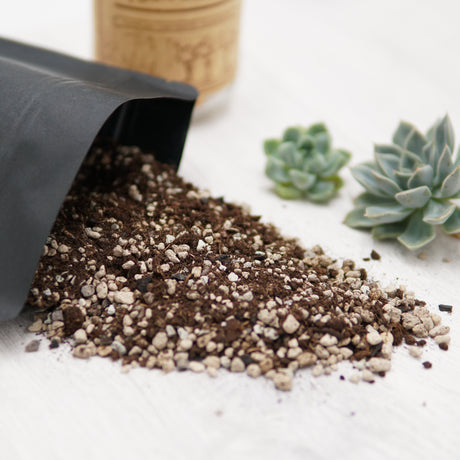
- Substrate: A mineral, well-draining substrate is crucial. A mixture of pumice, lava, sand, and a little humus is best.
- Water: During the growing season (spring to autumn), water moderately, always only after the soil has dried out. Keep almost dry in winter.
- Temperature: In summer, it loves warmth (20–30 °C). For flower induction, it needs a cool resting period in winter at 5–10 °C.
- Fertilization: From April to September, every 4–6 weeks with a potassium-rich cactus fertilizer.
Propagation
Sulcorebutia arenacea can be propagated in two ways:
- Offsets: Many plants eventually form small side shoots that can be detached and re-rooted.
- Seeds: Sowing requires patience, but it is the most authentic method and allows for the simultaneous cultivation of many young plants.
Usage
Thanks to its special color, Sulcorebutia arenacea is excellent as a highlight in a collection or as a decorative plant on sunny windowsills. It also looks particularly impressive in mineral bowl arrangements or as a contrast to purple-colored Sulcorebutias.
Frequently Asked Questions about Sulcorebutia arenacea
-
How often should Sulcorebutia arenacea be watered?
Only when the substrate has completely dried out. In summer, about every 1–2 weeks; in winter, almost not at all.
-
What color are the flowers?
Typically orange to brick-red, sometimes tending towards yellow-orange.
-
Why does the plant get shriveled spots?
This is normal during the dormant period. As soon as watering resumes in spring, the body will fill up.
-
Does it need light in winter?
Even during the dormant phase, it should be kept in a bright location, even if hardly watered.
-
What pot size is ideal?
Shallow bowls or small pots are ideal, as the roots do not extend deep.
-
Is it winter hardy?
No. It can withstand short periods of cold down to about 0 °C, but prolonged frost will damage it.
-
When does Sulcorebutia arenacea bloom?
In spring, often after a cool winter rest.
-
Can it be kept outdoors?
Yes, in summer in a sunny, dry spot – but protect from rain.
-
How big does the plant get?
Individual heads remain small (3–4 cm), but form groups over time.
- How old can it get?
With proper care, for decades.
Conclusion
Sulcorebutia arenacea is a small but spectacular cactus species with a unique coloration. Its sand-colored bodies, combined with vibrant flowers, make it a true highlight in any collection. At the same time, it remains easy to care for and robust – a perfect combination of beauty and simplicity.